Cities that answer to the water
- Words
- Ines Varga
- Published
A harbour skyline seen through a frame of white steel, and a hill city after dark: two ways a city arranges itself to face the water.
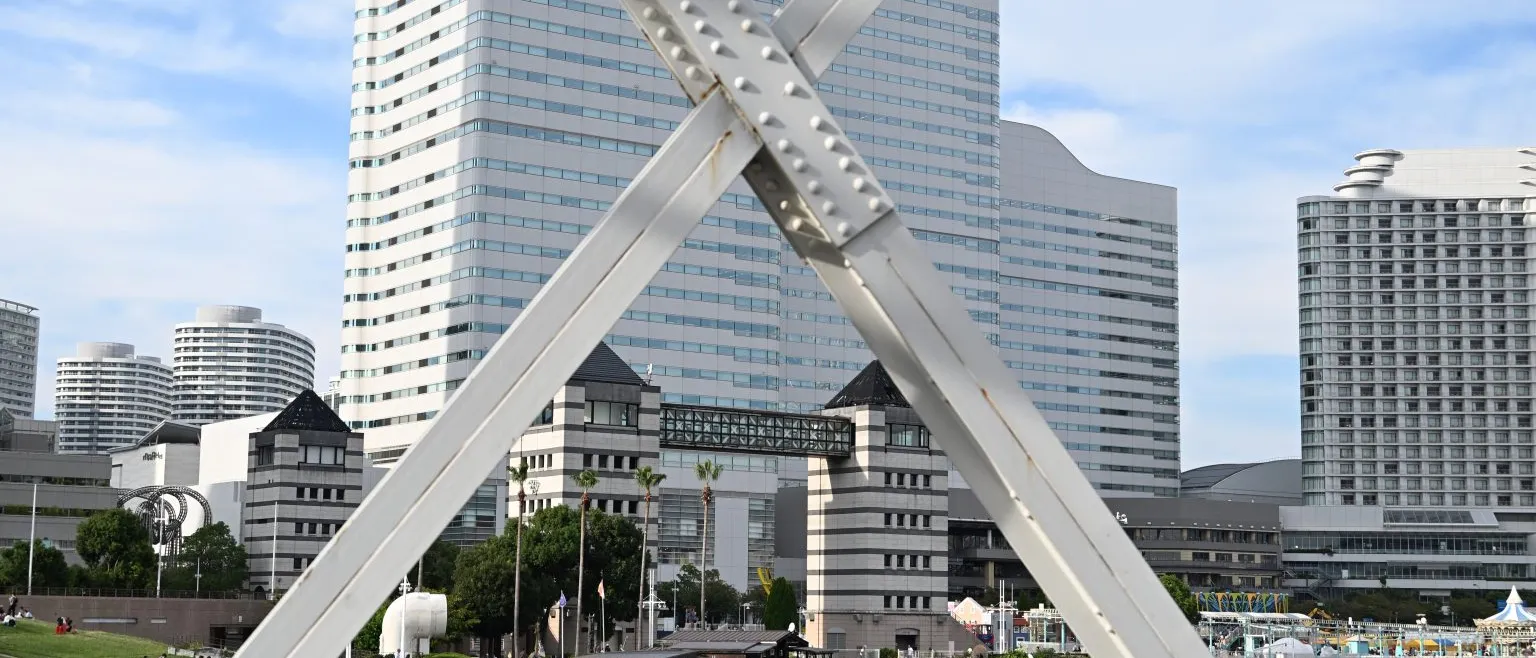
The first view of the harbour comes through steel. White beams cross the foreground at steep angles, and between them the towers along the water sit in frames of their own: one curved, one squared off, one mostly glass. Stand still for a minute and you start reading the skyline one panel at a time.
A skyline in panels
Waterfront cities tend to put their tallest and most self-conscious buildings where the land stops. The water gives them something a crowded centre cannot: distance to be seen from. A frame in the foreground, whether a bridge, a railing or a structure like this one, turns that distance into a composition.
It also slows people down. A walker who would pass an open promenade without looking will stop at a gap in the steel, because the beams say where the picture is.
The water gives a city something a crowded centre cannot: distance to be seen from.
The same question, after dark
A city built on hills beside a wide river answers differently. There is no single edge to stand on, only streets that fall towards the water, and at night their lights draw the slope more clearly than daylight ever does.
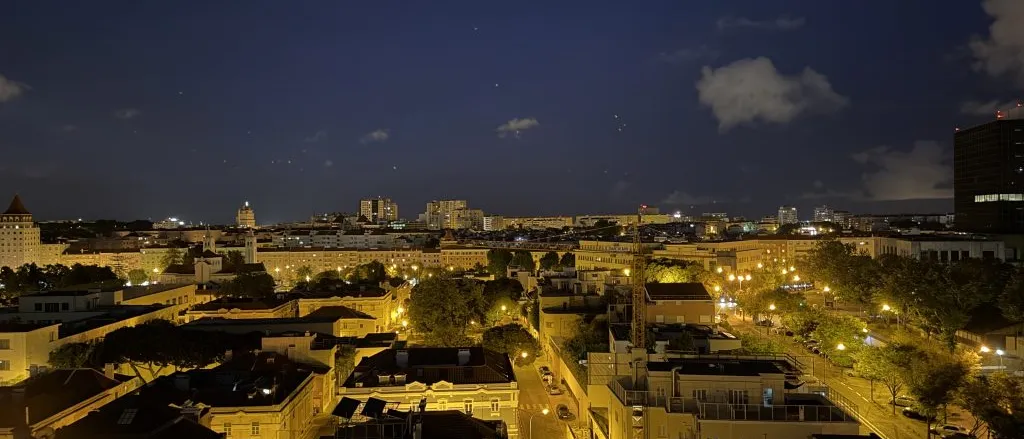
Neither view is an accident. Both cities have spent generations deciding what faces the water and what sits behind it, and those decisions are easiest to read from exactly where a visitor would stand.