After ten, the hills light up
- Words
- Tomas Reyer
- Published
A night walk above a river city built on hills, reading its streets by the colour and rhythm of their lights.
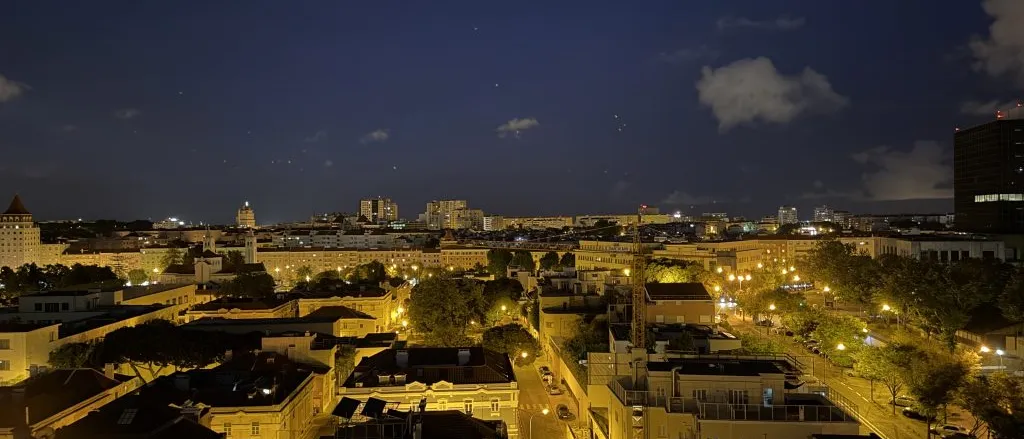
After ten the hills stop being a skyline and become a map. Daytime detail drops away, and what is left is light: lines of streetlamps along the roads, bright clusters where squares open up, and dark gaps where there are gardens, rooftops or simply nothing lit.
Reading the city by its lights
From a viewpoint above the old streets you can follow a single road a long way by its lamps alone, watching it bend with the ground. Steep streets show up as short, tilted strings of light; the flatter streets nearer the water as long, even ones.
Four things to look for
- Colour: warm orange and cold white lamps often mark older and newer lighting.
- Gaps: an unlit patch in a dense district is usually a garden, a steep slope or a large roof.
- Edges: the line where the lights stop is often the waterline.
- Movement: a bright point climbing slowly is a vehicle; a fixed one is a window.
After ten the hills stop being a skyline and become a map.
It is a way of looking that works in any hill city, and it asks for nothing but a clear night and a place to stand.